You may feel we are a little slow in releasing our post Monterey thoughts this year. There are some big questions to answer, and through a collector’s lens the implications are potentially significant. After a good deal of contemplation James has made a few observations.
The auction houses moved $755.6 million in collector cars over three days at Monterey Car Week 2026. That number is up 73 percent on 2025, and it sits roughly $284 million above the previous record set in 2022. Every headline that came out of the week called it a boom, and some are already calling it a bubble.
We don’t believe it’s either, but rather a structural decoupling. And once you understand the forces behind it, the record numbers start looking like a logical outcome.
The top of the market is a different market
The US collector market decoupled from the broader automotive sector years ago. What Monterey 2026 proved is that it has now decoupled from the traditional collector market itself.
Beneath the record total the picture stratifies quickly. Modern supercars carried premiums of 31 to 38 percent above condition-appropriate book value. In the same three days, 1960s cars — historically the market’s blue-chip backbone — sold at a median of 6.2 percent below Hagerty valuation. Take out the record-breaking 1964 Shelby Cobra Daytona Coupe at $42.9 million, and that is what the entire decade did.
Sell-through held at 76 percent, identical to 2025. Volume was effectively flat. The money came from a very small number of cars getting dramatically more expensive: 11 individual lots crossed the $10 million line, 32 crossed $4 million, and more than 130 sold above $1 million. For the first time in Monterey history, the combined low estimate across all five sales cleared $600 million before a single lot went on the block.
The top of the market is no longer one homogeneous space. It is a distinct secondary asset class, with its own supply dynamics, its own buyer profile, and its own price behaviour.
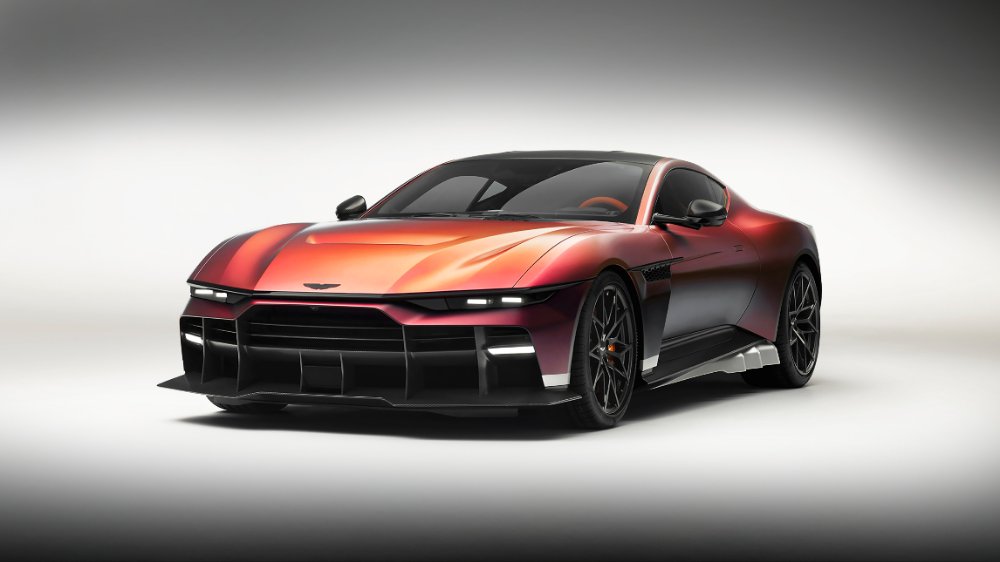
Given these extraordinary results, some commentators are raising alarms over an overheating market. We disagree.
What we are witnessing is a natural generational shift toward the cars of the 1990s and 2000s, colliding with an existential inflection point: the end of the analogue, sonorous ICE era. As technology charges forward, modern motor cars are increasingly designed as high-tech transportation, ceasing to offer the raw driving engagement that defined the previous three decades of performance.
That shift is not speculative. It is now visible in the buyer mix at the top of the auction room, in the pricing of specific reference models, and in the order books of the low-volume manufacturers who spent Monterey week revealing analogue-first alternatives to the mainstream direction. The forces are structural. Which means the numbers are not going to unwind.
Consider the core luxury performance market, a roughly $30 billion annual ecosystem currently being forced down the mandatory pipeline of hybridisation and electrification. As benchmark sports cars trade visceral emotion for advanced driver assistance and battery propulsion, purist buyers are left stranded. That passion-driven capital flees directly into the secondary market, hunting down the raw, high-performance mechanical experiences of the last thirty years.
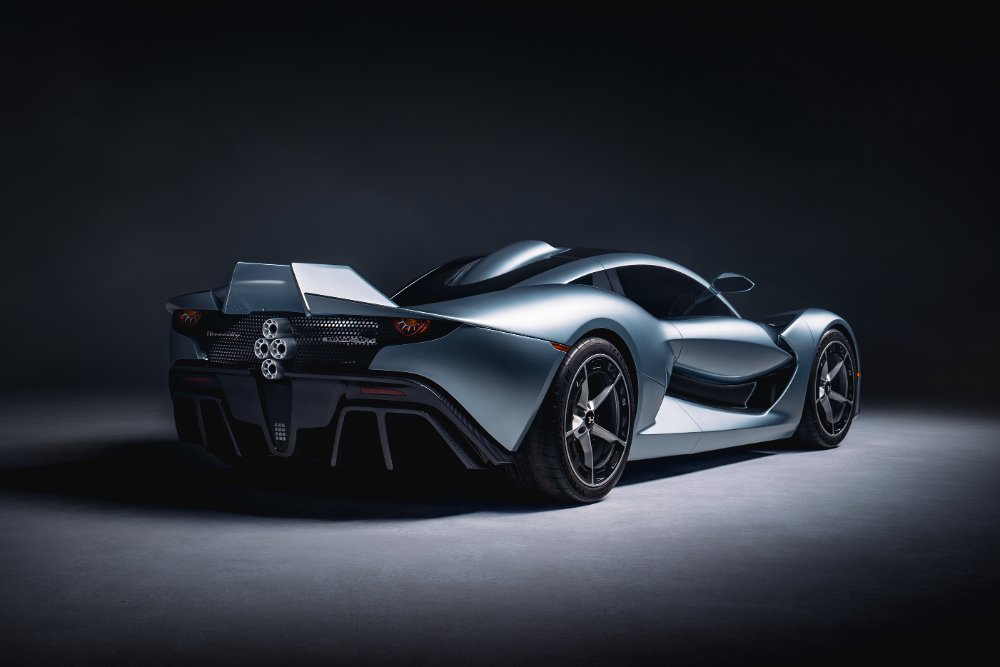
The financial maths behind this migration is staggering. If a conservative 25 percent of new sports car buyers reject the hybrid era and redirect their budgets, roughly $7.5 billion in annual capital shifts into the second-hand space.
To put that number in perspective: total annual global auction sales across live and online platforms sit at roughly $4.8 billion. Diverting even a fraction of new performance-car money represents more than 150 percent of existing global auction volume, slamming directly into an asset class defined by a strictly fixed, non-renewable supply.
The market simply cannot print more gated-manual Ferrari F355s. It cannot build more naturally aspirated 997 GT3s. It cannot conjure more first-generation V10 Audi R8s. Every one of those cars that exists, exists, and every one that doesn’t, never will. That is the supply side of the equation. The demand side is the $7.5 billion that has nowhere else to go.
Cars as content
Compounding this structural supply shock is a secondary, significant force at the top of the collector market: a fundamental shift in collector motivation.
A fine car has historically served as an exclusive ticket, an invitation to race at Goodwood, drive the Mille Miglia, or build friendships at the Pebble Beach Lodge. Today, fresh tech-driven capital has entered the arena, creating a new kind of collector-owner. Increasingly, cars are content, and buyers are building personal audiences and social currency on the back of them. The Instagram-verified owner is now a distinct market segment, driving competitive bidding to unprecedented levels.
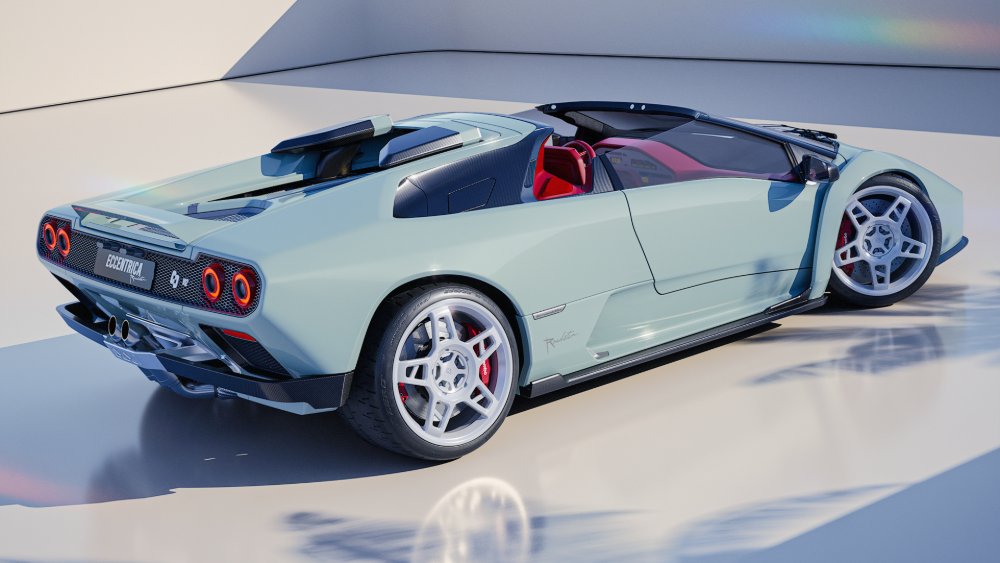
For that owner a seven-figure car is both a stored asset with an appreciation curve and a piece of content for their public personas. That’s a compounding return. When broadly fixed analogue supply collides simultaneously with stranded purist capital and hyper-competitive social validation, record-breaking numbers are just a logical outcome.
Is it any wonder auction results shattered records this year?