In the hallowed halls of the McLaren Technology Centre, certain acronyms carry a weight that transcends mere marketing. While names like “1 car” and “LT” define McLaren’s production cars, at McLaren Special Operations, based a few miles away in the old Formula One factory, there is one moniker that defines their mission: HS.
The McLaren 12C HS was not the product of a boardroom meeting; it was the result of a singular, ambitious vision from a VIP client who refused to wait for the future. This is the official, inside history of Bespoke Project 2 (BP2), the car that effectively built McLaren Special Operations (MSO).
The story begins with a gentleman who was no stranger to the McLaren family, having previously owned an F1 which he toured enthusiastically over much of Europe. As a member of the inner circle, he was well aware that the P1 hypercar was on the distant horizon, but his appetite for high-performance motoring couldn’t wait.
He approached McLaren Special Operations with a radical proposition: take the newly announced, and not yet in production, MP4-12C and wring every last drop of performance out of it. The project was codenamed BP2. At the same time, MSO was beginning work on BP1 (the polarising McLaren X-1), but the HS was the project that would push the engineering team to the absolute limit of technology and regulation.
Substance over style
Design reviews for BP2 were unlike any other. While MSO’s designers were enthusiastically conducting lengthy and detailed weekly styling reviews with the commissioning client of the X-1, the client’s feedback on the HS was almost exclusively technical. He rarely, if ever, commented on the “style” or the “look.”
His mantra was clear: “More power. Less weight. More downforce. And no compromise on luggage capacity.” In engineering terms, this distilled down to wanting the maximum acceleration available in the most appropriate direction at any given time, coupled with the ability to tour for a week at a time. When one thinks of performance propositions, this is a surprisingly uncommon offer. His relentless focus on physics over aesthetics forced the tiny team of engineers to innovate under immense pressure and against the backdrop of an ever-evolving base vehicle design.
The 12C HS was the first true MSO bespoke project in terms of technical delivery. To meet the client’s demands, MSO had to lean heavily on the main factory, acting very much as a “skunkworks” division. Being based at a separate location, MSO was mostly “out of sight” and “out of mind”, no bad thing in the context of pushing everything to the edge.
MSO never publicly announced the power output of the 12C HS, but both power and torque were increased as far as the cooling for the turbochargers would allow. A key limit was avoiding the turbos “over-spooling” at high altitudes. As was the case with the later MSO HS, engines were hand-selected, ensuring they were built to the absolute top of the tolerance range to maximise performance.
Aerodynamics: An homage to the F1 GTR
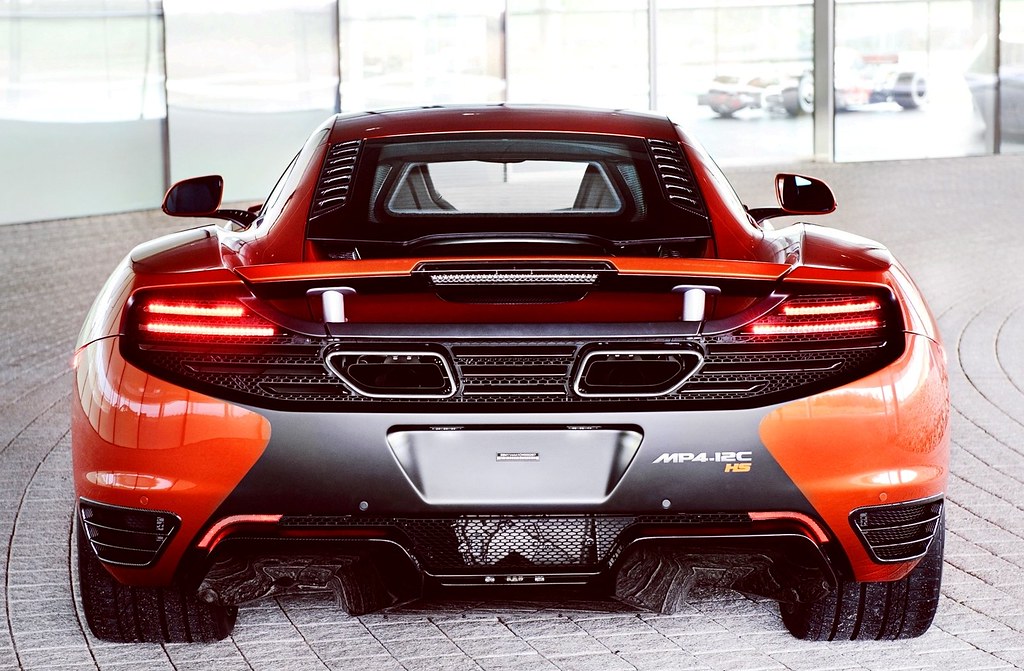
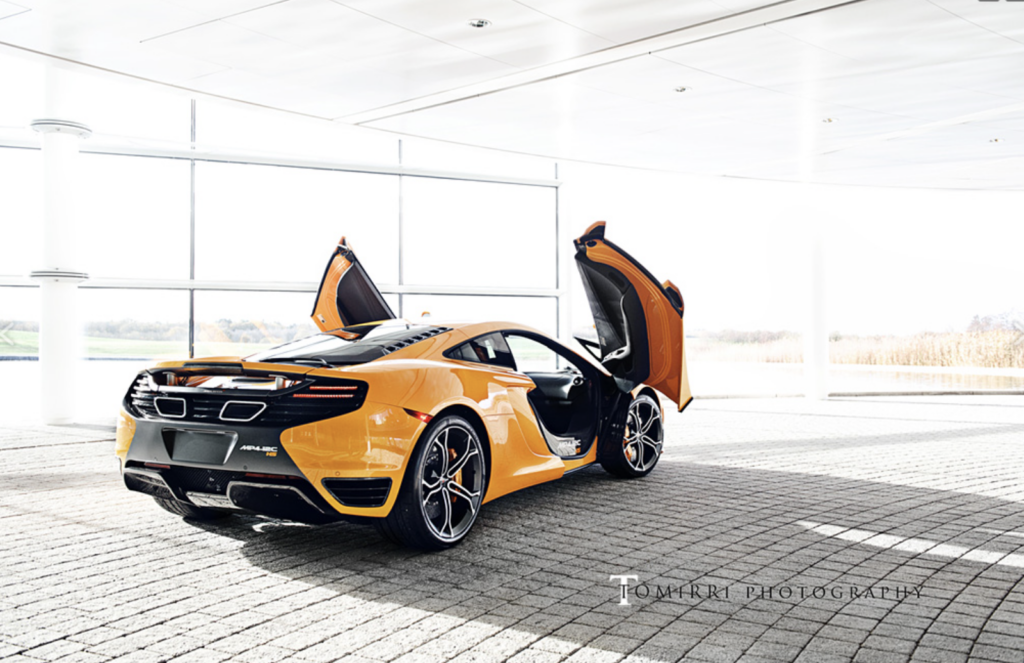
The visual aggression of the HS was purely a byproduct of the hunt for grip. A major design requirement from the client was to reduce lift in the front wheel arches; these were crafted to pay homage to the 1997 F1 GTR “Longtail.” They remain a key aesthetic of the HS and several MSO cars that followed.
Generating the bulk of the aerodynamic upgrade was the new underfloor. Considerable CFD (Computational Fluid Dynamics) analysis was conducted in the design of a new, vastly more effective rear diffuser, along with new front underfloor fences to manage airflow from the upgraded low-temperature coolers that exit so prominently from the sides of the new front bumper.
Because the MP4-12C was still in its prototyping phase, we were lucky to be able to take up-to-the-minute learning from the main engineering team, incorporating developments that came too late for the standard 12C and were later deployed in the 650S and 675LT.
Another upgrade, now a characteristic of all HS cars, were the prominent front dive planes required to restore a perfect aerodynamic balance. The rear wheel arches, too, were opened to the atmosphere, with the addition of aggressive low louvres aiding engine bay cooling. To provide additional cooling to these upgraded engines, distinctive auxiliary cooling ducts adorn the main radiator inlets. Sitting a little further into the airflow, they have a significant impact on cooling, albeit causing slightly more drag, but this car was not about top speed.
Unlike the later MSO HS, which was designed with considerable track focus, a key brief of the 12C HS was to provide comfort for long-distance touring. An asymmetric two-piece RIMOWA luggage set fitted the “frunk” perfectly. The factory 12C used a three-piece set that prioritised a small briefcase over total capacity. TUMI carry-on cases were sourced that could be secured perfectly behind the seats, though I confess that this was more luck than judgment.
A simple but useful change to the interior was the seating. The HS has much bigger seat pockets than the standard car so that wallets, room keys, and two-way radios could be stowed without rattling around the cabin at speed on an alpine pass.
The handover
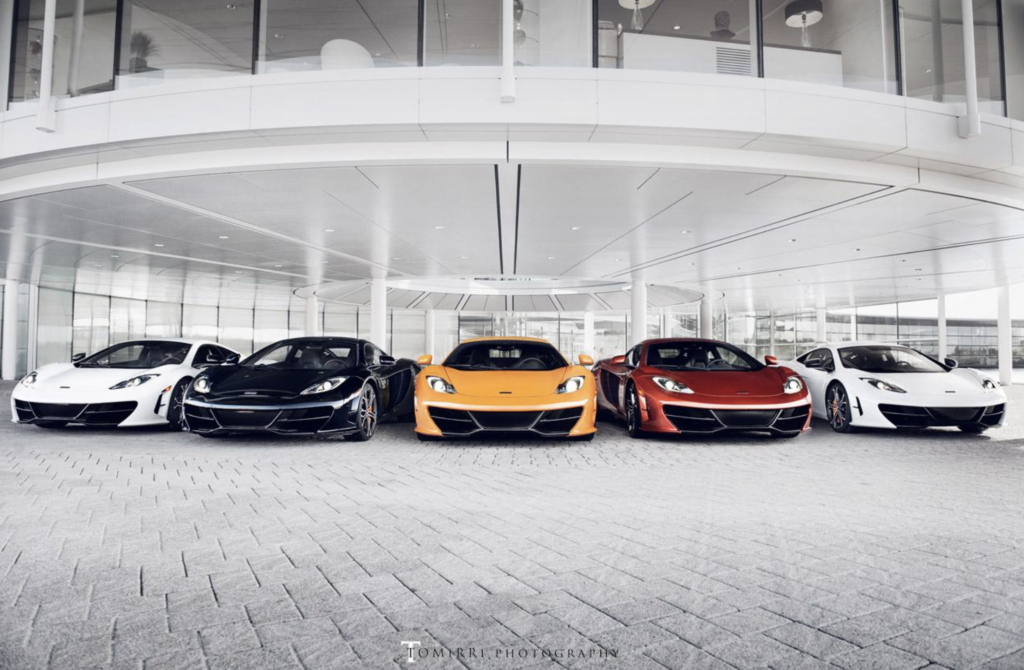
When the day finally arrived for the official handover, the team was anxious. They had spent months obsessing over cooling ducts, fender louvres, and protecting the powertrain, largely ignoring the car’s beauty in favour of its performance.
A client drive appraisal took place at a vehicle proving ground in the UK, alongside a standard 12C. Happily, the 12C HS was blisteringly fast, and there were smiles all around. Upon seeing the finished cars, the client, the man who had spent every review asking for more power and more grip, nonchalantly remarked with a smile that the cars were “better looking than he had expected.”
It was the ultimate validation for the BP2 project: by focusing purely on the science of speed, MSO had created a masterpiece of design. Today, the 12C HS remains a collector-grade holy grail, the moment MSO stopped following the rules and started writing their own.
The Birth of “MSO Defined”
The 12C HS was delivered soon after UK and European 12Cs had started shipping, and awkwardly, it arrived in the US before the standard 12C, something the US regional director was less than pleased about.
A happy side effect was that it drove considerable interest for modest MSO bespoke upgrades, not least because the 12C had come in for criticism for its front aesthetic, which some felt wasn’t sufficiently aggressive. While true at the time, the 12C is aging very well, exactly in line with the design brief.
During those early days, our brief was simply: “Never say no; just how much.” MSO’s role was to delight those with the deepest pockets and enhance the reach of McLaren Automotive’s then-tiny brand through a risk-on, nimble engineering approach. While delivering those objectives in spades, it also drew the attention of the board: MSO was starting to generate serious cash.
The research and development cost of BP2 was considerable. To keep the project financially realistic across just ten cars, we amortized much of the investment by offering some of the newly developed components to other high-profile customers on a piecemeal basis. With the commissioning client’s consent, this portfolio of upgrades became the genesis of what is now the MSO Defined range.
Items such as bespoke louvres, aggressive bumpers, and diffusers became strong sellers despite their eye-watering price. In later years, as MSO moved to a more commercially focused organisation, many of these parts were re-engineered to full OEM standards so they could be fitted on the production line and manufactured in high volumes at a keener price.
The Birth of MSO paint excellence
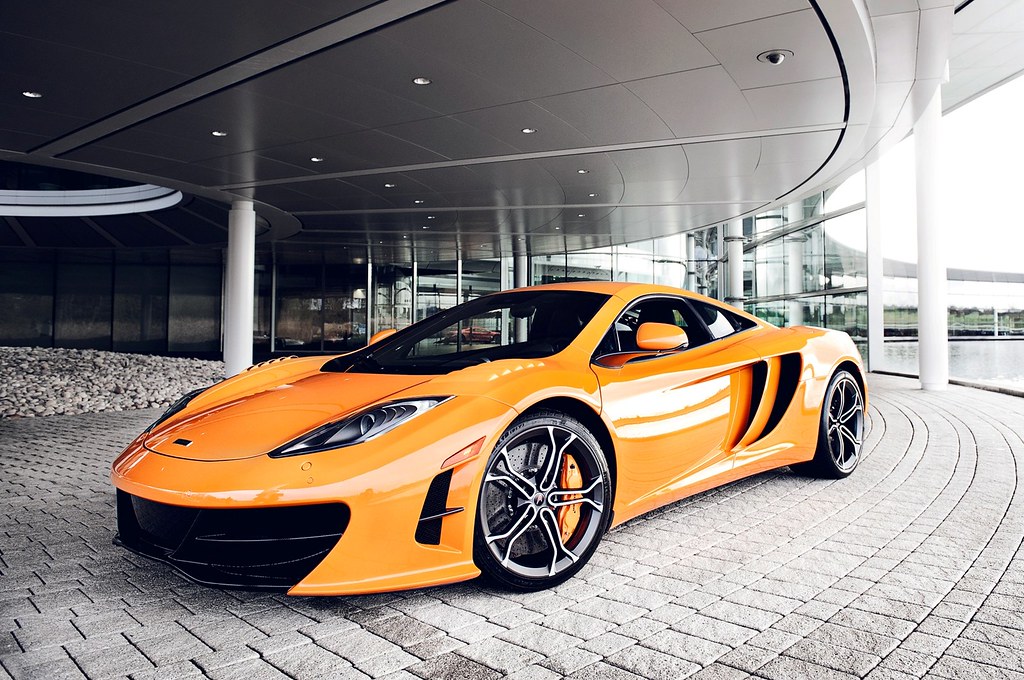
Each HS was a canvas for MSO’s nascent paint department. The commissioning client was eager for two of the cars to have very special colours. He wanted a historic orange that would “pop” in the sun, but MSO lacked a dedicated paint lab and personnel at the time. In a moment of shared frustration with a representative from AkzoNobel, a “what if” moment occurred:
“I wonder what would happen if we threw the drop-coat from the P1 Yellow over the top of McLaren Orange?” Twenty-four hours later, Papaya Spark was born. It was a discovery of chance rather than design, and it went on to become one of MSO’s most successful colours. It convinced the board of the importance of investing in MSO’s paint capabilities, now a huge contributor to MSO’s revenues.
It is hard to overstate the importance of the 12C HS to McLaren Special Operations’ history. If you’d like to add a 12C HS to your own collection, Chassis 5 is just back from a full recommissioning at MSO and is available over at LaSource Exchange. It takes just a few clicks to make an offer.