
If you know anything about diamonds, you know they only form under pressure. Immense pressure, in fact. And if you’ll indulge me, I’d like to extend that metaphor into the automotive world to talk about what I believe to be one of the greatest hidden diamonds: the McLaren MSO HS
The HS was the result of a fairly unique set of circumstances at McLaren that forced a group of hugely experienced people to solve a problem quickly, quietly, and without permission to fail.
Yet, for a long time, it’s been barely acknowledged. Only those who know — engineers, designers, owners — speak about it in the same reverential tone usually reserved for legends.
In my former role as Head of Bespoke Cars at McLaren, I helped conceive and oversee the development of the HS, along with a number of brilliant people. So now, as we’re in the 10th year since its reveal I wanted to tell a little bit of the story behind its creation.
A company growing faster than its systems
By 2015, McLaren Automotive had matured at extraordinary speed.
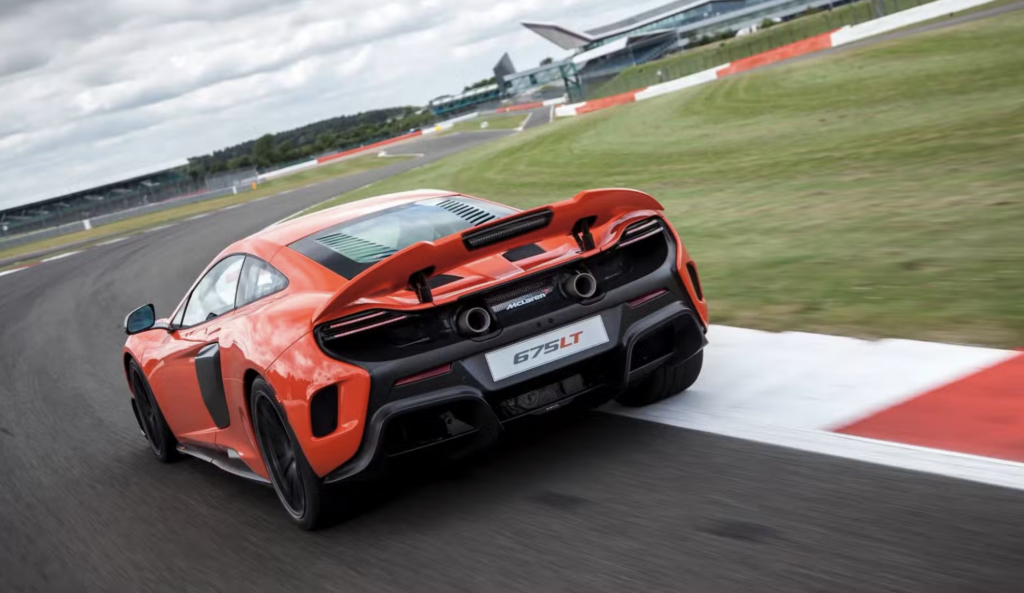
The MP4-12C had re-established the road-car business, and then the 650S refined it. Then came the 675LT; the final, most resolved evolution of the P11 platform. Lighter, sharper, and infused with lessons learned from the P1 hypercar – it felt like a car that had nothing left to prove.
The press loved it. Top Gear’s Jason Barlow called the 675LT “the best McLaren road car since the F1,” and noted it was “closer to the P1 dynamically than it is to the 650S.” Meanwhile, Jeremy Clarkson’s verdict on the P1 itself was characteristically blunt: “We’ve seen fast cars before, but we have never encountered anything quite like the P1.” So when MSO set about building something beyond even the 675LT, the bar was already stratospherically high.
But while the cars were thriving, the business infrastructure was at a tipping point.
McLaren had outgrown MAXIM, the bespoke production system originally developed for the F1 and later expanded during the Mercedes-SLR years. To scale properly, the company had to migrate to SAP, McLaren Racing’s long-term technology partner, and the transition meant stopping the production line completely.
No cars. No output. No cashflow. For a company where cars spend six to seven weeks on the line and parts are ordered months in advance, the transition was a real threat to survival. So, the board turned to McLaren Special Operations and our little ragtag team.
The skunkworks solution
MSO had always lived slightly outside the broader McLaren Automotive system. In a way, we were a law unto ourselves, and quite often people in the business had little idea what we were doing. We built one-off cars and quiet upgrades, mostly operating on trust and discretion rather than noisy marketing campaigns.
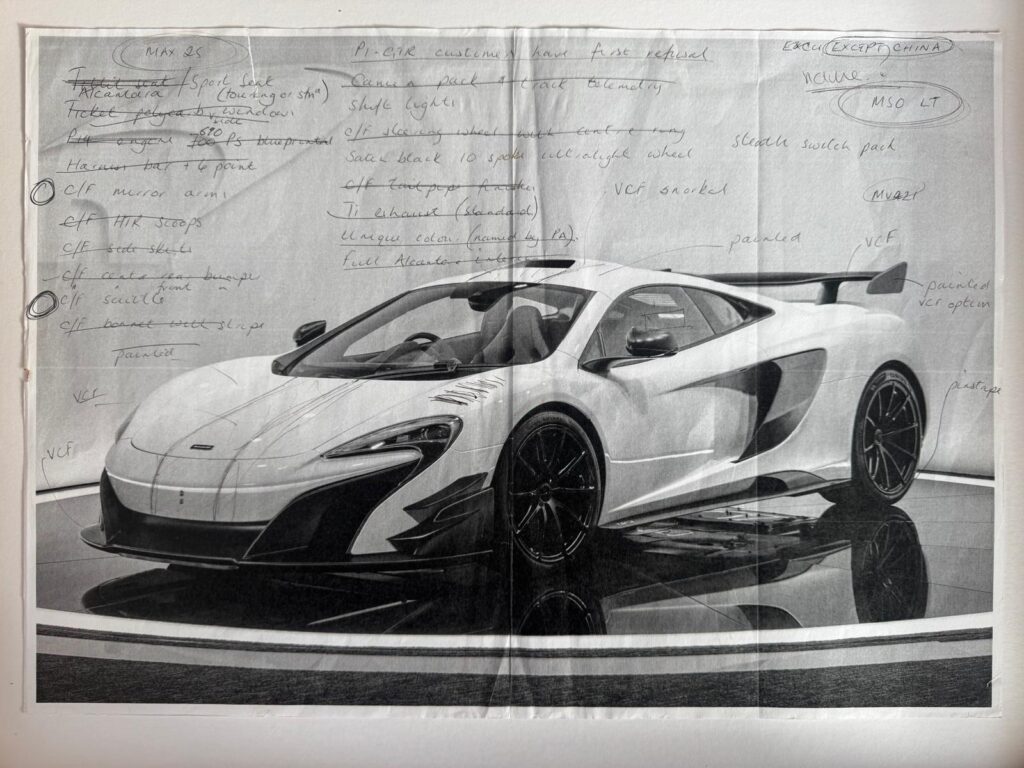
So, we proposed to build a limited run of cars off-system. No SAP. No formal programme architecture. Just a base 675LT and an add-and-delete list — effectively managed in Excel — layered on top. The HS would share its starting point with the 675LT, but where a standard sports McLaren uses a carbon fibre tub within a broader aluminium and glass composite structure, the HS was conceived and built as a full carbon fibre car — putting it structurally in the company of hypercars, not supercars cars.
There were echoes of the limited edition MP4-12C ‘High Sport’ in this but with the benefit of another 3-4 years’ development and improvement at McLaren.
With such a passionate group of people behind it, we couldn’t allow our new HS to simply be an ‘options car’. As Paul Arkesden, who led the engineering on the P1 and later MSO said: “The 675LT was already exceptional. It was a very accomplished car. We just wanted it to be one step beyond.”
The car customers kept asking for
Our idea was prompted by some of our loyal customers repeating the same question:
“Can you build me a P1 without the battery?”
They loved the response, the immediacy, the way the car made them feel. But the hybrid system added enormous weight and complexity. Removing it would have required rewriting Bosch software at immense cost.
It wasn’t feasible, but it did show that there was a desire for more performance and a willingness to pay. As Paul remembers:
“People weren’t asking for more numbers. They wanted sensation. They wanted something lighter, louder, more direct. The HS became our answer.”
Paul saw this as an opportunity to create what he describes as “an engineering-led evolution that McLaren could itself plausibly have signed off.” The priorities just aligned differently. MSO could do what the main business perhaps could have done if they really, really wanted to — but commercial realities meant they couldn’t.
The core ingredients for the HS mostly already existed – aside from a few of the bespoke components such as the front and rear bodywork – just not in one place.
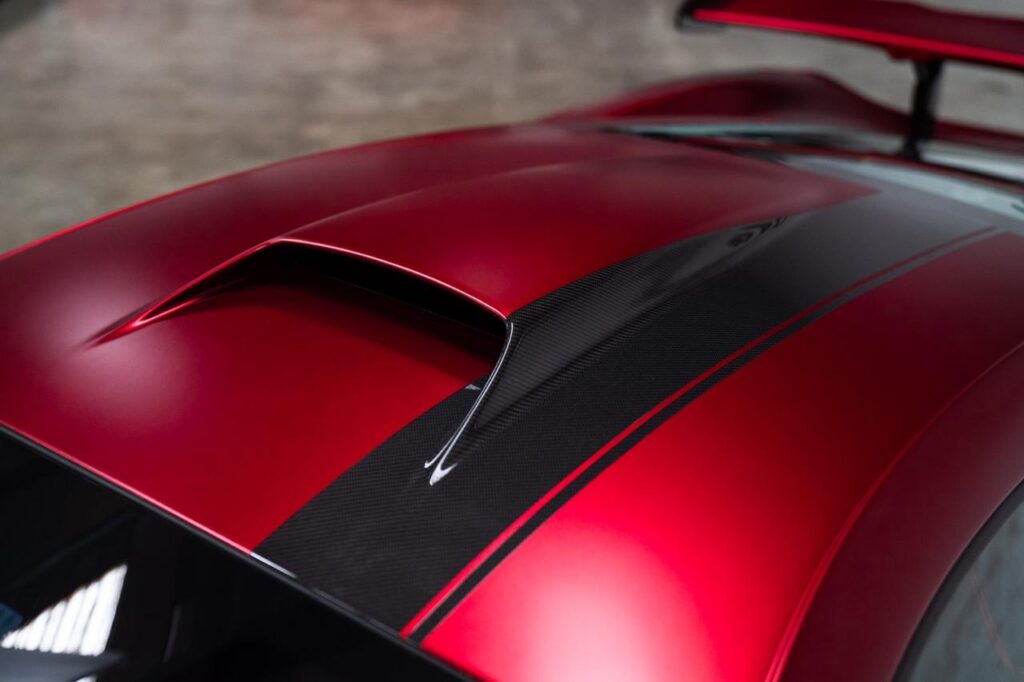
There was the MSO roof scoop, an “on application only” option that rerouted intake air from the roof straight into the engine. It transformed the driving experience. Suddenly the turbo whistle wasn’t something you heard faintly behind you, it was right above your head. Like the P1, at full throttle you have such a close connection to the mechanical intricacies of the car, literally hearing the air sucked in through the scoop.
“I had a very particular sound in mind,” Paul says. “I knew how the car needed to feel.”
But this wasn’t just about drama. Every change had purpose. The development started with subjective attribute targets – what does the driver actually want? – which Paul then translated into objective engineering measures.
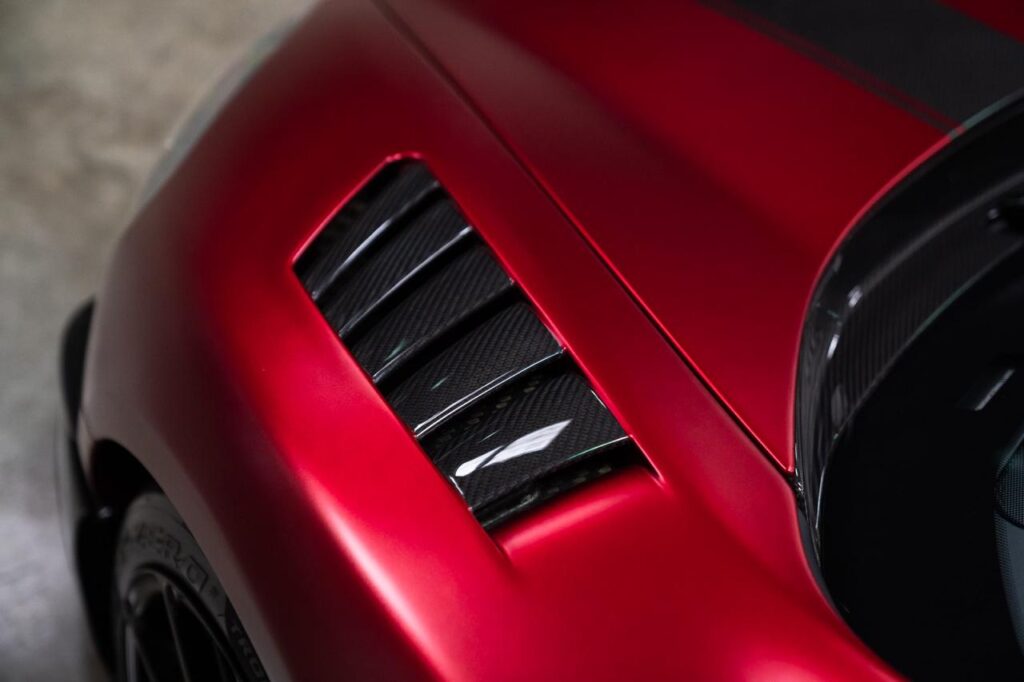
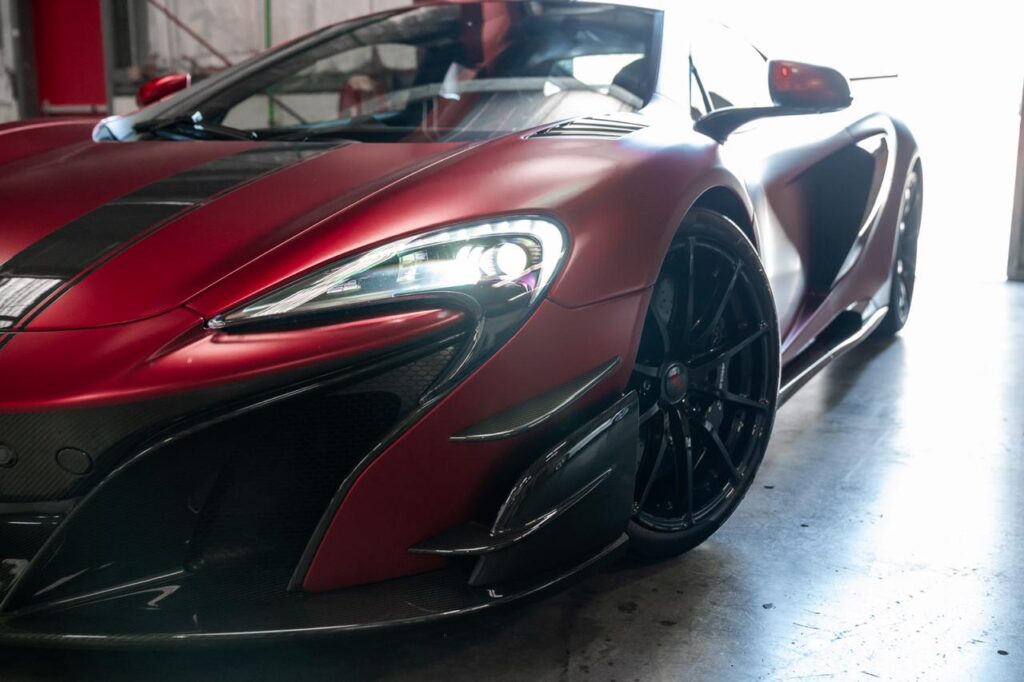
They wanted more cornering performance and better handling through faster corners, so the team developed a complete aero package: new rear body sides, modified front fenders, louvres to reduce wheel arch pressure, and aggressive front dive planes. All tuned by pro driver Gareth Howell at MIRA proving ground near Nuneaton.
The stopping performance needed improvement too. Paul’s team retuned the airbrake calibration to be more aggressive – not a different part, just a more track-focused setup.
There was a dormant high-downforce aero concept: a towering rear wing with bespoke actuation mechanism, aggressive dive planes, real functional downforce. And since this is McLaren, everything has a genuine purpose.
“It wasn’t a superficial body kit,” Paul insists. “We did the full aero loop of analysis. We removed torque limits, changed shift points, unlocked performance that the core business couldn’t deliver – not because they weren’t capable, but because the user profile was different.”
The engine was blueprinted. Cylinder heads were hand-finished by Cosworth. Engines were individually selected and validated. Output climbed to 688 PS, but more importantly, the usual restrictions and protections were removed. The calibration changes were the real revelation.
“For instance, the 675LT had torque limits to stop the car wheel-spinning in third gear,” Paul explains. “These cars are generally driven by gentleman drivers. But if this is a real track-focused car, we can get rid of those torque limits. We can tune the torque curve, change the power curve, remap the throttle. Unlock all the performance all of the time and make it absolutely track-focused.”
Understanding compromise
“We understood McLaren’s internal compromises,” Paul explains. “And compromise is not a dirty word. Engineering is all about compromise. You can’t have Rolls-Royce levels of refinement and Caterham’s mass. You can’t have fantastically low CO2 and fantastically high performance.”
The main business had to engineer the 675LT for what Paul calls “a 95th percentile customer” – a broad spectrum of abilities and preferences. Some would be collectors. Some would use it as a daily driver. The car needed safety margins.
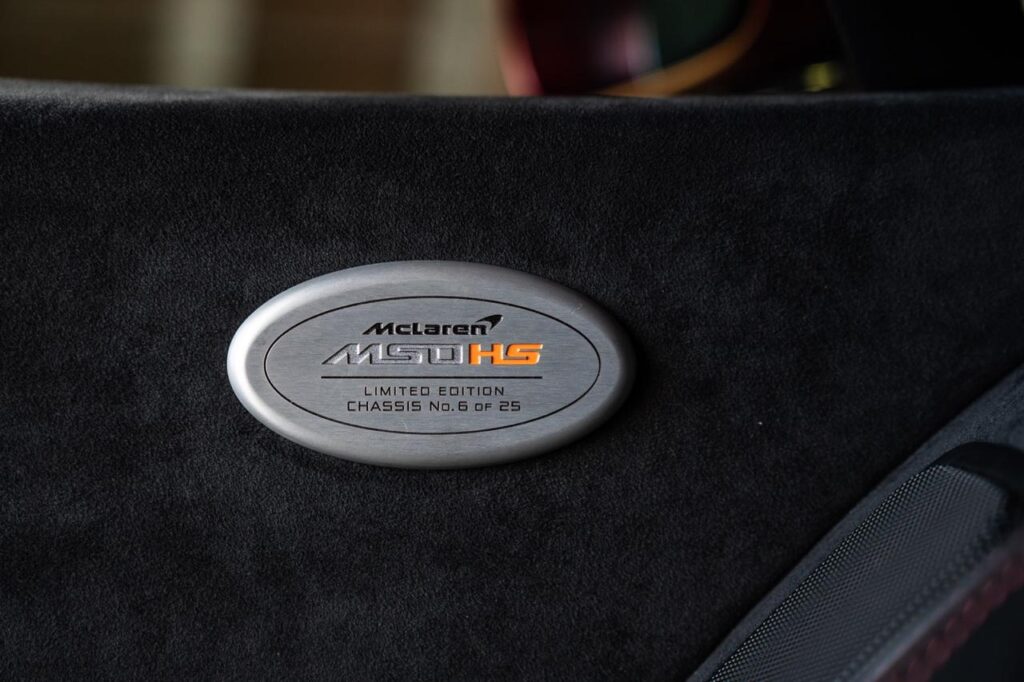
But MSO was building for just a few customers, and they knew exactly who was buying them. Still, it had to be a McLaren and it had to feel like a McLaren. “It had to be deserving of that badge,” he says. “It couldn’t be a Frankenstein version. It had to be a natural extension of the brand. Not a hot rod. Not some custom build shop monster. A natural extension of what McLaren just couldn’t do themselves.”
Building something that shouldn’t exist
Turning this idea into a physical object fell to Dave Davis.
At the time, he was a manufacturing engineer, and suddenly found himself responsible for building one of the most bespoke McLarens ever conceived.
“It was so bespoke that even internally people didn’t really know what it was,” Dave recalls. “We had to teach the P1 technicians how to build it; they’d never built a 675 before.”
The decision was made to build the HS on the P1 Technical Assembly line, where cars were built slowly, carefully, obsessively. Parts arrived without part numbers. Some existed only once, and Dave remembers parts getting delivered, simply addressed to him personally. “A lot of the time a load of parts would turn up, maybe just with a product code on and nothing else.”
Despite the low volume and bespoke nature, the development process was remarkably rigorous. Paul’s team went through a complete test plan — not the 95th percentile validation the main business required for 1,000 cars, but something tailored precisely for the customers they knew would buy it.
“We knew our customers,” Paul says. “James knows them all. We did the appropriate level of testing commensurate with those customers and that very small sample size. We could take considered risks, knowing each individual customer personally.”
Gareth Howell, the pro driver, put the car through its paces at MIRA (The Motor Industry Research Association vehicle proving ground in the UK). He’d sit with the calibration team and dial in exactly what he needed: “this brake pedal feel, this brake booster feel, this tip-in, this tip-out feel.”
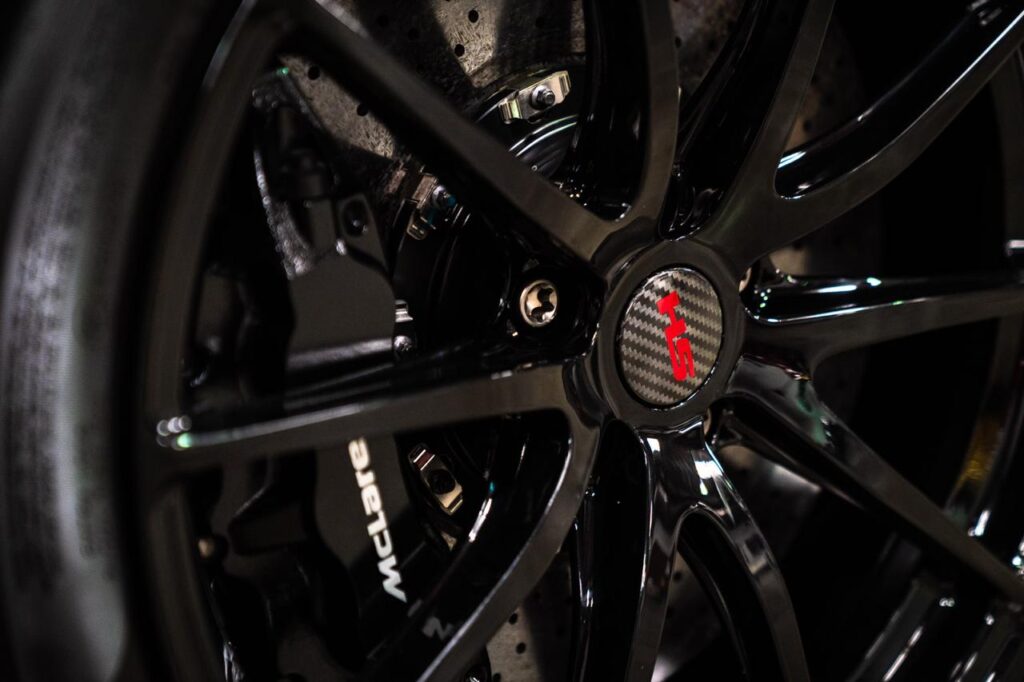
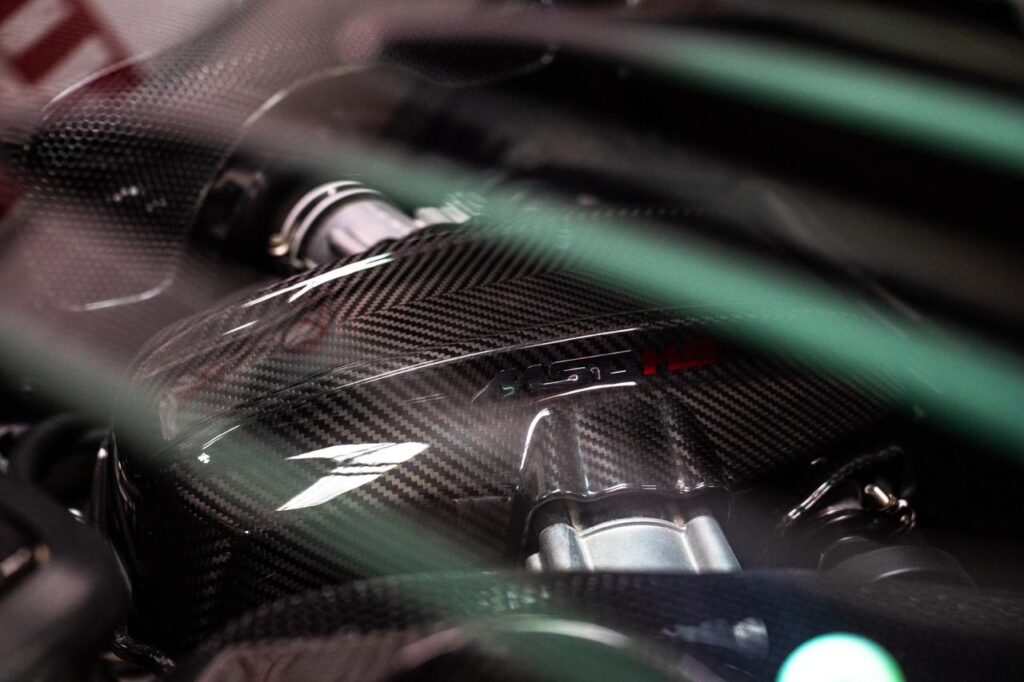
The team also made changes that required knock-on engineering. The roof scoop meant rerouting the entire air induction system — normally behind the driver, now on top of the driver’s head. That meant interior modifications. They added a six-point harness bar. A lighter, more free-flowing titanium exhaust that could be tuned to whatever “purply” colour the customer wanted. Dedication plates. A branded plenum cover.
“If you broke some of these bits,” Dave says, “you weren’t getting another.”
The rear wing mechanism was completely bespoke; never used again. The front dive planes were unique to the HS and many body panels were re-engineered in carbon fibre to reduce weight. Even the rear bodywork had to be re-designed to manage airflow and downforce balance.
“Every single one was different. Truly bespoke.”
Design without compromise
For Esteban Palazzo, former Principal Designer at McLaren, the HS represented rare freedom. Years of ideas — louvres, aggression, visual drama — had been trimmed away from mainstream products by cost caps or a general sense of caution. HS gave him permission to bring them back.
“It was a chance to inject everything you really wanted to do,” he says. “Not just styling, but a holistic design.”
Alex Alexiev, who led the MSO HS design, looked to strip everything back to pure function. “The MSO HS was about taking the 675LT to its absolute functional limit. In the interior, every surface – the dashboard, the seats, the headlining – is Alcantara. It’s not just for the look; it’s to eliminate reflections on the windscreen during track use. We wanted to remove any visual noise.”
That same philosophy extended to how the driver received information. Rather than relying solely on the screens, Alexiev designed a bespoke integrated shift-light array mounted directly into the carbon fibre instrument hood. It was a jet-fighter approach to information, and one that Alexiev has since cited as a direct precursor to the advanced digital interfaces of the W1.
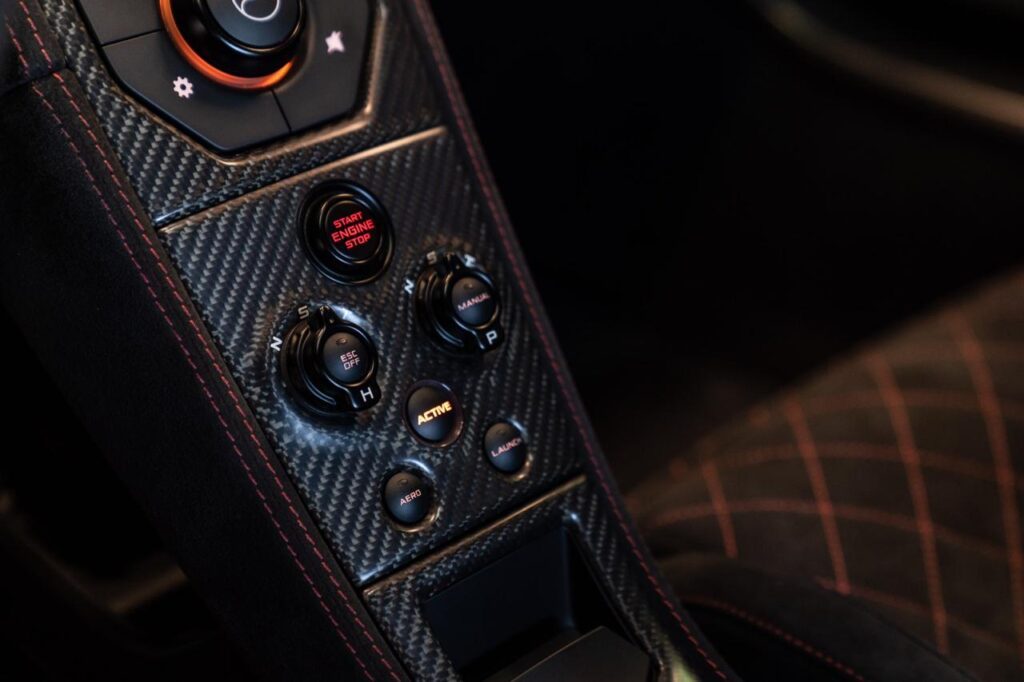
“On projects like the HS, you are working with a very narrow performance window,” Alexiev explains. “The client wants luxury, but the car demands lightness. My job was to make the carbon fibre look like a piece of jewellery while ensuring it saved grams over the standard 675LT components.” Where a standard 675LT uses carbon for selected components, the HS was built as a full carbon fibre car, placing it in the company of McLaren’s hypercars rather than its sports cars.
Customers were invited into the process. Lunch meetings became configuration sessions. Sketches were spread across tables. Decisions were made that later required formal disclaimers.
“Some cars were so extreme in their design that we actually needed formal paperwork to present to the customers,” Esteban remembers. “You had to acknowledge that your choice of dashboard colour was going to affect visibility or the 24 carat gold in the engine bay might need restoration at some point down the line, for example.”
Every HS told a different story, bought and configured by one of the most passionate and enthusiast McLaren collectors in the world. It was a chance for them to own a piece of McLaren history and many of them jumped at the chance to get creative.
“It was a level of bespoke that McLaren had never really done before, and when I look back on HS now it definitely established a blueprint for how MSO could integrate with the road car business more thoroughly, something which came to be in the years after HS was revealed.”
Selling a secret
My part in the HS story, away from all of the genius of the engineers and designers involved was one of product brief, oversight and sales. We never had to announce it, we didn’t brief dealers. There was no configurator. No brochure.
Instead, my team and I made just 27 phone calls to allocate the 25 production cars.
In the years since, cars changed hands for sums that startled even us. One reportedly touched seven figures. What had begun as a stopgap had become something else entirely and most of the top global McLaren collections feature an HS, alongside a P1 and of course an F1.
Why it still matters
Today, the MSO HS is like the ultimate cult supercar.
Rarer than a P1. Rarer than almost anything. Almost invisible unless you know exactly what you’re looking at, and hailed as one of the best McLarens ever built – F1, P1, HS.
Enthusiasts have nicknamed it the 688 HS. Owners have nicknamed it the Baby P1 – and many of them regard the HS as the finest McLaren they’ll ever own. Not the fastest, necessarily. But the most complete. The most honest.
Having asked the team involved exactly why this car is so special, they all had a similar response. For them, and for everyone that knows about it, it represents something increasingly rare: a small group of people trusted to follow instinct, freed from restrictive process, united by creating the best car possible.
Dave talks about the pride of building something slowly, meticulously, without compromise. Paul still lights up when he talks about how it feels at full load.
Esteban describes it best:
“It’s a letter to the real car lover.”
That’s why I bought one. Not as an investment — though it still feels undervalued — but because it delivers a level of focus, intent and connection you simply don’t find anymore, and reminds you that cars this special come along very, very rarely.
McLaren MSO HS
- Price new/now: undisclosed/£600,000
- Powertrain: 3.8L twin-turbocharged V8, 688PS, 700Nm
- Gearbox: 7-speed dual-clutch seamless shift, RWD.
- Performance: 0–62mph in 2.9s, ~205 mph
- Weight: 1,230 kgs
- Top speed: Approx 205 mph
- Kerb weight: ~1,230 kg
- Downforce: 220 kg at 150 mph,